
Deye Energy Storage
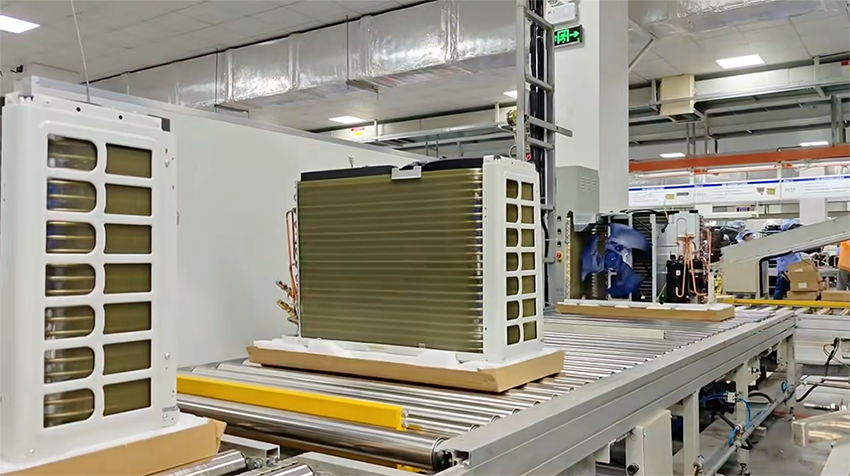
Ningbo Deye is a large manufacturing technology enterprise integrating R&D, design, production, sales, and service. It currently operates several business segments including energy storage, environment appliances represented by dehumidifiers, heat exchangers, and inverters. By introducing an MOM project at the Longshan energy-storage plant, Deye is building a digitalized, transparent factory with the capability to replicate and roll out across all manufacturing segments, establishing a benchmark smart-manufacturing plant for Deye.

Business Needs & Challenges
- Kitting checks for materials at each planning level relied on manual verification, with low efficiency.
- Workshop planners manually calculated and split section-level plans using spreadsheets based on production experience.
- Information such as work-order progress, process progress, and schedule delays was communicated manually, causing lag.
- Material feeding, material shortages, equipment anomalies, and quality anomalies were all notified and responded to offline, with poor timeliness.
- With too many test operations, equipment integration required validation against the product process route to prevent station-skipping production.
Implementation Scope
N2.MES Manufacturing Execution System
Intelligent warehousing, AGV integration, work-order management, process management, quality management, planning management, traceability management, mistake/error-proofing, early-warning management, equipment management, SPC, reports & dashboard…
Core Requirements Addressed
- Integrate with the WCS system, enabling interaction among the MOM–WCS–RCS triad, to realize AGV material transport.
- The system performs kitting calculations for the selected warehouse based on the work-order bill of materials; after saving, materials are pre-locked; materials requiring transfer generate a transfer order with one click; shortage information is proactively alerted and clearly displayed.
- For sheet-metal parts, by maintaining product sub-component information, the system automatically controls and validates the released quantity when issuing work orders, splitting work orders into section/line work-order operation plans.
- Test equipment is equipped with check/save interfaces: first, based on the SN, the system confirms whether the operation conforms to the process route; the check interface allows the equipment to start testing; after testing completes, the save interface is called to upload data.
- Production control and reporting are granular, with real-time display of work-order progress, section progress, and process progress.
- Anomalies are managed (initiation, acceptance, closure, etc.) via a mobile app, supporting multi-level early-warning push notifications and real-time parameter analysis through SPC.
Implementation Benefits
- Material kitting efficiency improved by 20%
- Exception handling time reduced by 30%
- Production efficiency improved by 20%
- Quality traceability accuracy reaches 100%
