
Automotive Parts
As a pillar industry of China, the automotive sector is accelerating toward the "Three New Transformations": electrification, intelligence, and connectivity. Under this trend, the value distribution across the automotive industry chain is undergoing significant changes, reshaping the competitive landscape of the automotive parts market. Production of automotive components is also shifting toward high-mix, low-volume manufacturing, which requires enterprises to operate with greater flexibility and agility. As a result, an increasing number of manufacturers are advancing their smart manufacturing and digital transformation initiatives.
Management Challenges
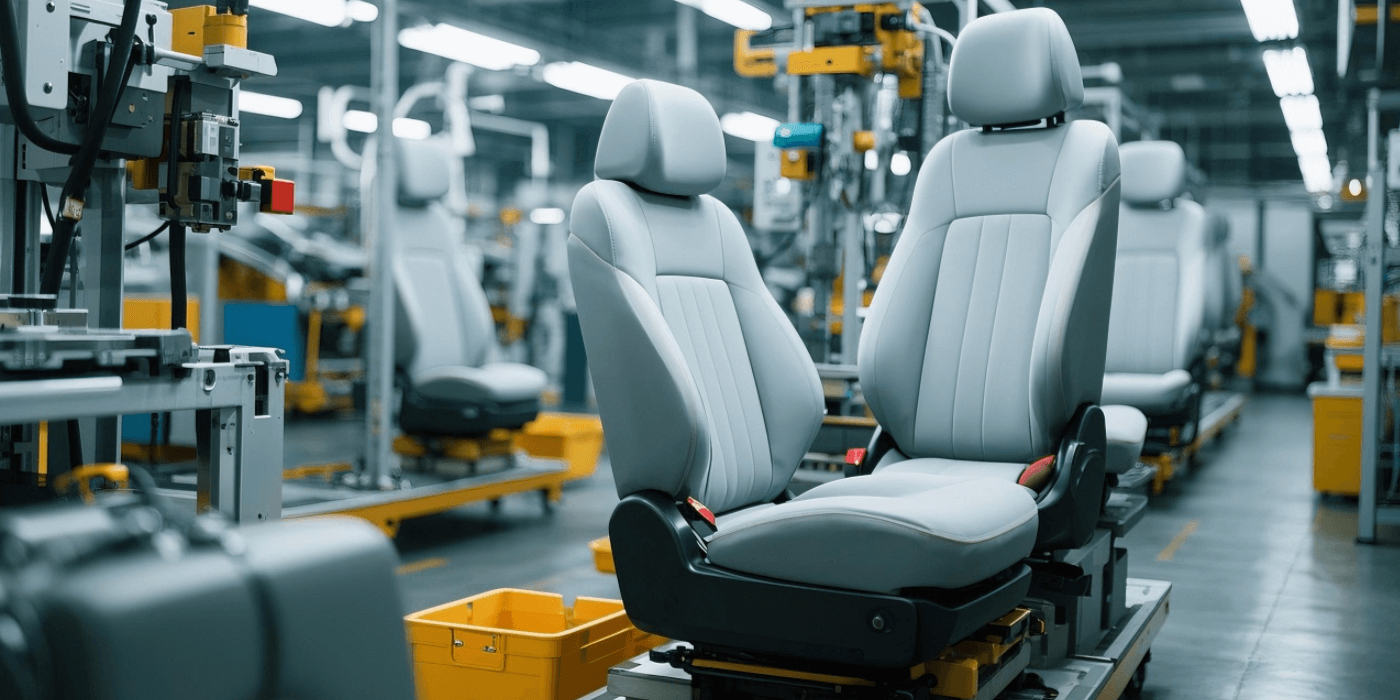
Automotive part manufacturing is characterized by diverse production models, complex manufacturing processes, intricate product configurations, differing optimization goals across workshops, and varying production modes for different vehicle types. Efficient R&D, reliable quality, cost reduction, efficiency improvement, on-time delivery, and reduced inventory are the core elements of sustainable development for enterprises.
- Low accuracy in production plan execution, with poor on-time work-order completion rates.
- Lack of transparency in the production process, making it difficult to obtain accurate process information and resulting in high communication costs.
- Production management remains extensive, with weak dynamic control over manufacturing resources and processes, resulting in low efficiency and long production cycles.
- Quality traceability and quality improvement lack effective data support, making comprehensive quality management difficult to implement.
- Significant fluctuations in customer demand make plan adjustment challenging, material pull control difficult, and impose higher requirements on production takt balance.
- Equipment cannot be monitored in real time, hindering further improvement in production efficiency.
- The APQP process is complex, demanding, and difficult to control.
Solution
For the automotive parts industry, Morewis has developed a comprehensive digital transformation solution that helps enterprises become outstanding suppliers to OEMs and rapidly replicate factories across different locations. Focusing on delivery, quality, and cost, the solution enables end-to-end integration of internal processes and coordination across the external upstream and downstream supply chain. From warehouse management and production operations to shop-floor execution and finished-goods shipment, the solution supports enterprises in building a holistic digital management system that ensures reliable quality, on-time delivery, product traceability, aftermarket tracking, and continuous cost reduction.
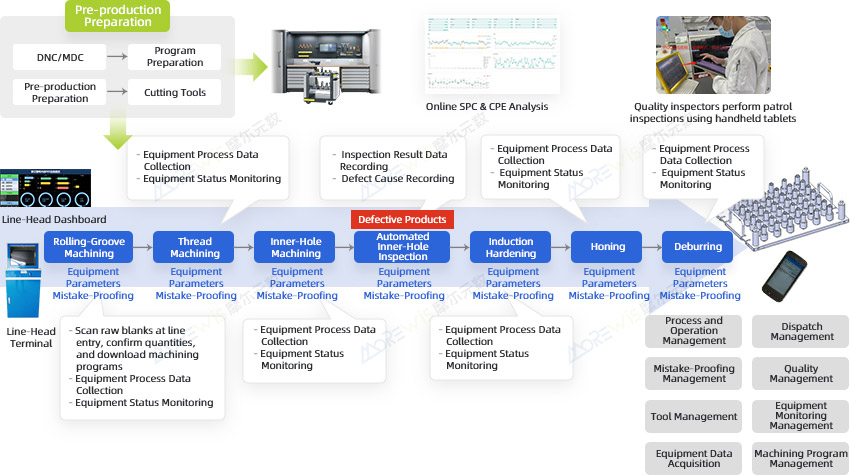
Application Scenarios in Automotive Parts Assembly Workshops
Addressing Core Needs
- Provide digital support for planning, scheduling, and monitoring to guide the shop floor in achieving balanced production.
- Utilize real-time production data collection to efficiently support job assignment, production release, and material preparation, enabling flexible responses to customer orders.
- Enable final assembly to drive machining and material-kitting plans, supporting multiple material distribution modes to achieve synchronized logistics for high-takt production.
- Collect real-time production process data and enable process visibility and transparency to support rapid response to abnormalities and improve production efficiency.
- Offer comprehensive product and process management capabilities, ensuring full control over production processes while supporting product definition and product management.
- Implement lean production processes to improve overall responsiveness and reduce work-in-process dwell time.
- Establish a quality management system compliant with IATF 16949, building a complete electronic quality record and knowledge base for practical application.
- Record process inspections in real time and perform online CPK & SPC analysis to prevent defects from flowing downstream and ensure full quality traceability.
- Monitor equipment operating status and data at any time, with digital support throughout the equipment maintenance lifecycle to improve equipment utilization.
- Use visual dashboards to clearly present shop-floor conditions and resource changes, guide on-site execution, and enable factory-level performance control and analysis.
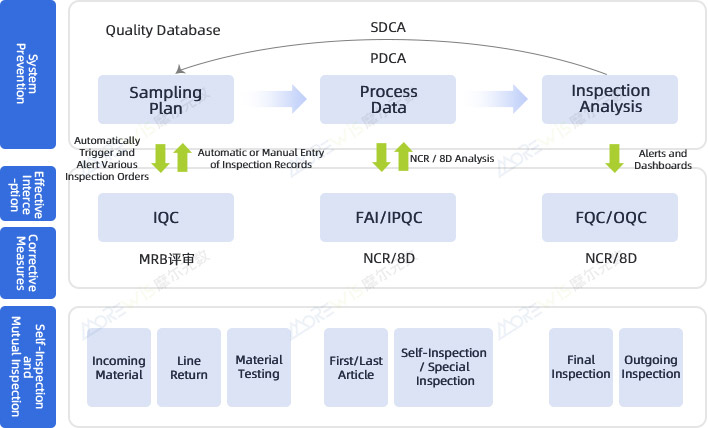
Establish a Quality Management System Compliant with IATF 16949
Implementation Benefits
- Break down barriers between production departments and process stages to achieve production transparency.
- Strengthen digital control with system-level mistake-proofing and end-to-end bidirectional traceability, enhancing overall quality management capabilities.
- Enable granularity-based management for different types of materials, achieving barcode-enabled, fine-grained material control.
- Seamlessly integrate with information systems and equipment to obtain real-time machine operating data and monitor KPI data.
- Comprehensively enhance control capabilities across materials, production, and quality, improving the passing rate of OEM audits.
