
CASTECH
CASTECH Inc., founded in 1990 by the Fujian Institute of Research on the Structure of Matter under the Chinese Academy of Sciences, was listed on the Shenzhen Stock Exchange in 2008. As a global leader in crystal components, precision optical components, and laser devices, the company has established a complete technological chain covering crystal growth, processing and coating, device packaging, performance testing, and R&D to production. Its products are widely used in industrial fields such as laser technology, optical communications, semiconductors, AR/VR, life sciences, autonomous driving, environmental monitoring equipment, and analytical instruments.

Business Needs
- Inability to accurately manage plans and inventory, resulting in low plan fulfillment rates and high material loss.
- Warehouse operations rely heavily on manual labor, leading to high costs and material stagnation.
- Lack of transparency in process management, delayed information flow, and elevated quality risks.
- Lack of systematic error-proofing mechanisms, making traceability impossible.
- Absence of systematic management for equipment, tooling, and fixtures.
Implementation Overview
N2.MES Manufacturing Execution System
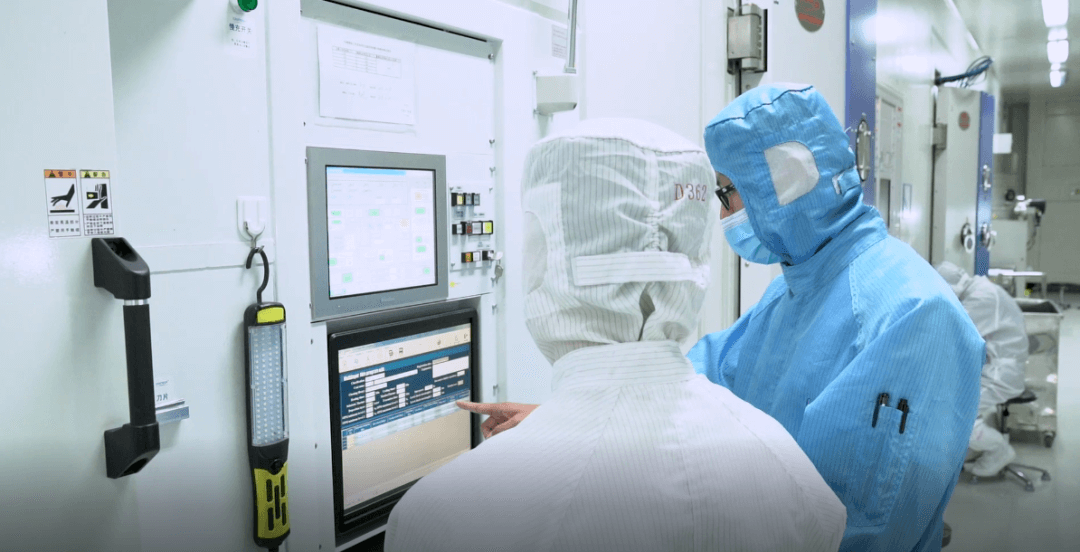
Covers work order management, visual planning management, warehouse management, process management, quality management, equipment management, tooling and die management, traceability management, visual dashboards, and integration with ERP/PLM/OA systems. The system supports raw material warehouses, finished goods warehouses, optical workshops, product workshops, device workshops, and coating workshops.
How the Solution Addresses Core User Needs
- Comprehensive analysis of production factors such as plans, resources, and orders, enabling real-time visibility into inventory during the production scheduling process and supporting visual scheduling.
- Optimization of warehouse operations through system-based error-proofing mechanisms, FIFO control, and flexible material management.
- Establishment of full-process process control and quality traceability models, enabling system-level error-proofing mechanisms, and end-to-end traceability.
- Establishment of a digital, multi-level management and issue-resolution mechanism that supports real-time statistical analysis and feedback of shop-floor conditions.
- Use of equipment big data to build a preventive TPM management system, enabling equipment maintenance and the management of tooling and fixtures.
Implementation Benefits
- Plan accuracy increased by 50%
- Warehouse capacity utilization increased by 25%
- Production cycle time reduced by 10%
- Production management costs reduced by 15%
- Quality department operational costs reduced by 15%
