
XX Molding Company
Located in Southwest China, the company is a high-tech enterprise specializing in medium and large plastic molds for automotive interior and exterior parts. With more than three decades of experience in plastic product and mold manufacturing, it has built deep technical expertise in developing molds for large bumpers, instrument panels, sub-instrument panels, door panels, and pillar assemblies. The company is now a supplier to globally renowned automotive manufacturers including Audi, Volkswagen, FAW-Toyota, SAIC-GM, Dongfeng Peugeot-Citroën, Ford, Geely, Changan, BYD, and Great Wall.

Business Needs
- Low process transparency, difficult information access, and high communication costs.
- Insufficient dynamic control of production resources and processes, resulting in low efficiency.
- Lack of data support for quality traceability and improvement, making quality control difficult.
- Production plans fluctuate with demand, increasing the difficulty of synchronizing production rhythm with material coordination.
- Lack of real-time monitoring for equipment and molds, hindering efficiency improvement.
- APQP processes are complex and strictly controlled, but lack error-proofing mechanisms, making management difficult.
Implementation Overview
N2.MES Manufacturing Execution System
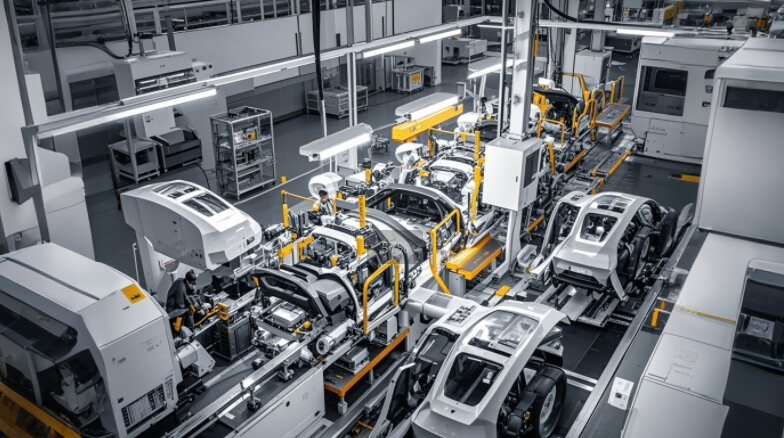
Covers master data, work order and plan management, production management, process management, material management, quality management, equipment management, data interfaces, Kanban management, and reporting management. The system spans injection-molding lines, coating lines, assembly lines, trim lines, slush-molding lines, repair areas, semi-finished goods warehouses, purchased-parts warehouses, finished-goods warehouses, mold warehouses, and material storage areas.
How the Solution Addresses Core User Needs
- Fully integrates data-collection and processing capabilities for equipment data and key operational information, establishing a comprehensive equipment maintenance system that combines monitoring, early warnings, and error-proofing.
- Connects with other enterprise information systems to dynamically calculate capacity loads and analyze material and mold status; supports visual scheduling through Gantt charts to ensure transparent plan execution and closed-loop management.
- Records, traces, and analyzes various production events and abnormalities, automatically triggering alert mechanisms to achieve comprehensive error-proofing across all production processes.
- Displays key KPI indicators in real time via electronic Kanban and large visual screens, enabling managers to monitor shop-floor conditions instantly.
- Provides real-time monitoring of quality and inspection data, ensuring full product traceability and material backtracking to satisfy OEM audit requirements.
Implementation Benefits
- Shortened pre-production preparation and inspection time (materials/molds), optimizing mold-preparation workflows and program setup.
- Reduced changeover time and process buffering, shortening the waiting time for in-process inspections.
- Enhanced transparency of progress, quality, and efficiency, with real-time equipment-status feedback and plan-trend warnings.
- Reduced rework and defects caused by inspection errors or delayed anomaly handling.
